
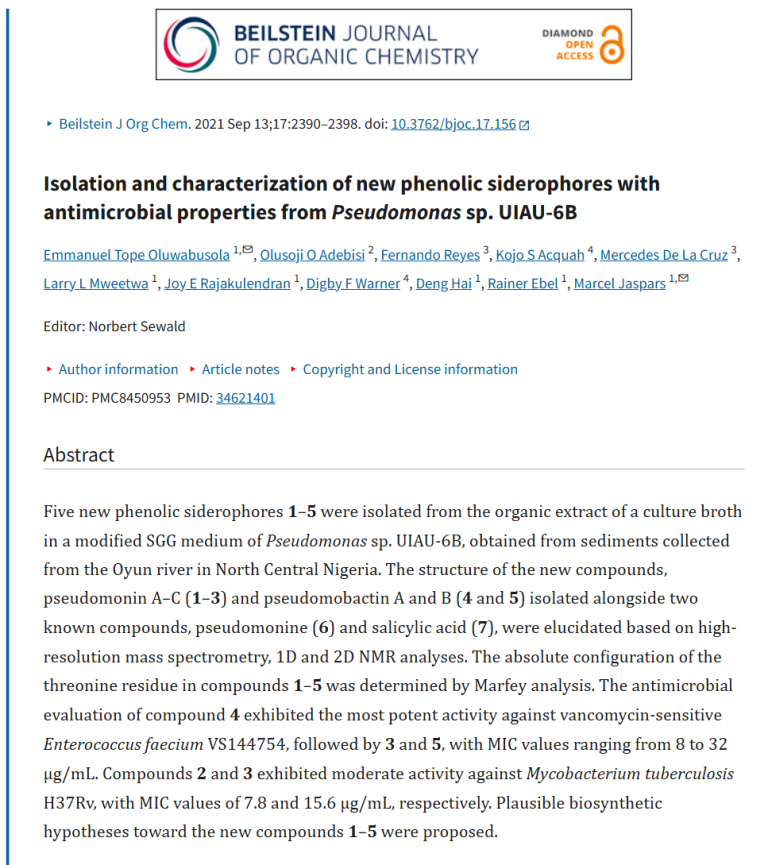
New natural compounds produced by bacteria in contaminated soil potentially work against AMR?
This new study looks at a newly discovered strain of bacteria named Pseudomonas sp, UIAU-6B, which was discovered in polluted soil and river sediments.
These Pseudomonas bacteria are commonly found in the wild and are well known for helping plants grow and producing natural chemicals that can help fight harmful microbes.
When this bacteria does not have enough iron needed to survive, it produces special molecules called siderophores. These mollecules help it pull and collect iron from the surrounding soil/sediment that its in.
In this study, scientists discovered 5 brand new siderrophores that had never been studied before. These new compounds are part of a group called phenolicc siderophores.
After isolating the siderrophores in a lab, researchers then tested these compounds and found that some of them were able to slow down or even stop the growth of dangerous bacteria, including ones linked to serious infections such as tuberculosis and AMR infections. In some cases, their effect was even similar to well known antibiotics.
While it may not seem like something found in the dirt could be that important to us, this new discovery is incredibly important as it shows that even polluted environments can still contain valuable compounds that can help to develop new medicine.
These natural compounds could play an incrediblly important part in the future fight against AMR, which is of the upmost importance to start fighting against now.
Reference:
Oluwabusola, E.T., Adebisi, O.O., Reyes, F., Acquah, K.S., De La Cruz, M., Mweetwa, L.L., Rajakulendran, J.E., Warner, D.F., Hai, D., Ebel, R. & Jaspars, M., 2021. Isolation and characterization of new phenolic siderophores with antimicrobial properties from Pseudomonas sp. UIAU-6B. Beilstein Journal of Organic Chemistry, 17, pp.2390-2398